2023年9月24日星期日

How Much Diesel Does a 5 Ton Forklift Use?

Welcome to our comprehensive guide on the fuel consumption of a 5-ton forklift powered by diesel. If you're in the material handling industry or considering investing in a forklift, understanding its fuel efficiency is crucial. In this article, we will delve into the factors that affect the diesel consumption of a 5-ton forklift and provide you with valuable insights to help you make informed decisions.


The Power of a 5-Ton Forklift

A 5-ton forklift is a workhorse in many industries, capable of lifting and transporting heavy loads with ease. These robust machines are widely used in warehouses, construction sites, and logistics operations. However, it's essential to consider their fuel consumption to optimize operational costs and minimize environmental impact.
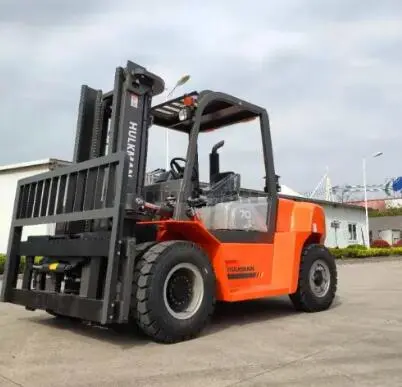
 

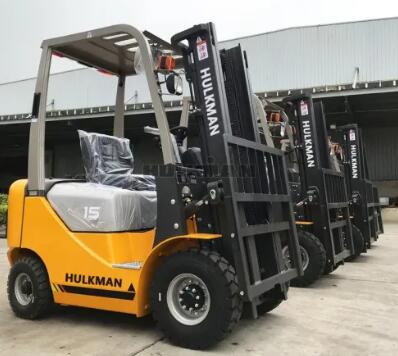
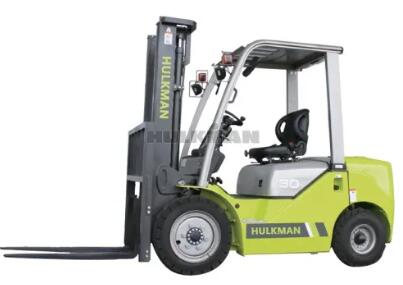
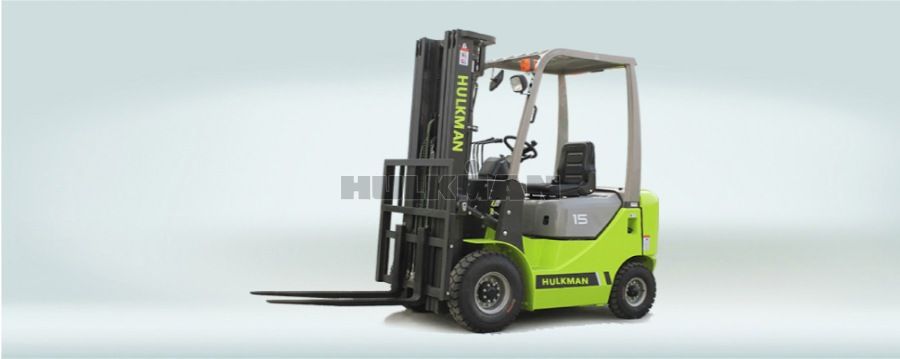
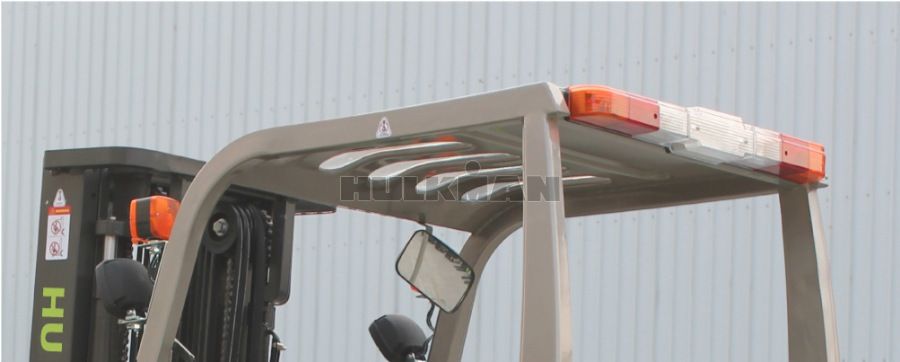
5 Ton Diesel Forklift


Factors Affecting Fuel Consumption

1. Load Capacity

The weight of the load being lifted plays a significant role in a forklift's fuel consumption. When a 5-ton forklift operates below its maximum capacity, it requires less energy to perform tasks, resulting in lower fuel usage. Therefore, efficient load management and avoiding unnecessary overloading can significantly impact fuel economy.


2. Terrain and Operating Conditions

The type of terrain and operating conditions can influence the fuel efficiency of a forklift. Rough or uneven surfaces, such as gravel or inclines, increase resistance and make the engine work harder, leading to higher fuel consumption. On the other hand, smooth surfaces and well-maintained working environments contribute to better fuel economy.


3. Driving Habits and Operator Training

The skills and driving habits of the forklift operator play a crucial role in fuel consumption. Proper training and adherence to best practices, such as avoiding sudden acceleration or deceleration, can significantly reduce fuel usage. Encouraging operators to adopt fuel-efficient driving techniques, like maintaining consistent speeds and reducing idle time, can also make a notable difference.


4. Maintenance and Equipment Condition

Regular maintenance and keeping the forklift in optimal condition are vital for fuel efficiency. Poorly maintained engines, worn-out tires, and dirty air filters can increase fuel consumption. Implementing a preventive maintenance schedule, including regular tune-ups, filter replacements, and tire inspections, can help ensure the forklift operates at its peak performance and fuel efficiency.


Fuel Consumption Estimates

It's important to note that exact fuel consumption figures can vary depending on various factors. However, to provide a general estimate, a 5-ton diesel forklift may consume approximately 3-4 liters of diesel per hour of operation under normal conditions. Remember, this is just an average, and actual consumption will depend on the factors mentioned above.


Tips for Improving Fuel Efficiency

To further optimize the fuel consumption of your 5-ton forklift, consider implementing the following tips:
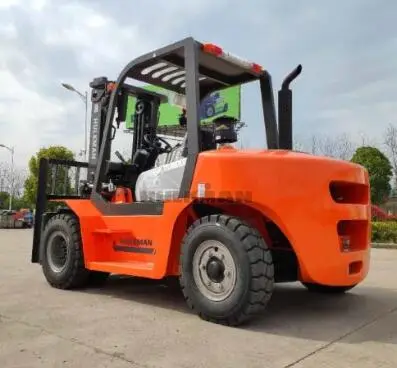
 

5 Ton Diesel Forklift


1. Optimize Load Handling

Efficient load handling involves ensuring that loads are balanced, avoiding unnecessary trips, and minimizing empty runs. By optimizing the way you handle loads, you can reduce the number of cycles and, consequently, decrease fuel consumption.


2. Utilize Technology

Modern forklifts often come equipped with advanced technologies that enhance fuel efficiency. Features such as automatic engine shut-off during idle periods, eco-driving modes, and telemetry systems can provide valuable data and insights to help you monitor and improve fuel consumption.


3. Track and Analyze Fuel Usage

Keeping detailed records of fuel consumption allows you to identify patterns and areas for improvement. By monitoring fuel usage over time, you can pinpoint inefficiencies, make data-driven decisions, and implement strategies to reduce consumption effectively.


4. Train Operators

Investing in comprehensive operator training programs ensures that your forklift operators are equipped with the knowledge and skills to maximize fuel efficiency. Training should cover proper driving techniques, maintenance awareness, and the importance of adopting fuel-saving practices.


Conclusion

In conclusion, understanding the factors influencing the fuel consumption of a 5-ton forklift is essential for efficient operations and cost management. By optimizing load handling, utilizing technology, and focusing on training and maintenance, you can significantly reduce fuel consumption and enhance the overall productivity of your operations.


Remember, continuous improvement and monitoring of fuel usage are crucial for achieving long-term fuel efficiency goals. By implementing the tips provided in this article, you can take proactive steps towards reducing fuel consumption and operating a more sustainable and cost-effective forklift fleet. We are a diesel forklift supplier. If you are interested in our products, please contact us now!

2023年9月5日星期二

Electric Forklifts vs. Diesel Forklifts: Understanding the Key Differences

In today's industrial landscape, forklifts play a vital role in material handling operations. When it comes to choosing the right forklift for your business, there are various factors to consider. One of the primary decisions you need to make is whether to opt for an electric forklift or a diesel forklift. Understanding the key differences between these two types of forklifts can help you make an informed decision that aligns with your specific requirements.


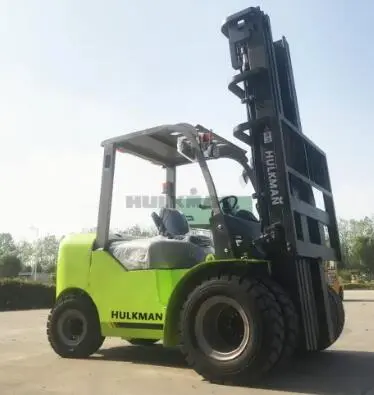
4 Ton 4.5Ton Diesel Forklift


Power Source

The most apparent difference between electric forklifts and diesel forklifts lies in their power source. Electric forklifts are powered by rechargeable batteries, while diesel forklifts utilize diesel fuel. This fundamental distinction has significant implications for their performance, operating costs, and environmental impact.

Performance and Efficiency

Electric forklifts are known for their quiet operation and zero emissions, making them ideal for indoor use or environments with strict emission regulations. They are powered by electric motors that offer instant torque and smooth acceleration, providing efficient and responsive performance. Electric forklifts also excel in maneuverability due to their compact size and precise controls.

On the other hand, diesel forklifts are typically more powerful and better suited for demanding outdoor applications. They boast higher torque, allowing them to handle heavy loads with ease. Diesel forklifts also provide a longer operating time, as refueling with diesel is quicker compared to recharging electric forklift batteries. However, their noisy operation and emissions make them less suitable for indoor or environmentally regulated areas.

Total Cost of Ownership

When considering the total cost of ownership, it's essential to evaluate both the upfront investment and the long-term expenses associated with operating the forklift. Electric forklifts generally have a higher initial cost due to the expensive battery and charging infrastructure. However, they offer lower operating costs since electricity is typically cheaper than diesel fuel. Moreover, electric forklifts have fewer moving parts, resulting in reduced maintenance requirements and longer lifespans.

In contrast, diesel forklifts have a lower initial cost, but they incur higher ongoing expenses due to fuel consumption and regular maintenance needs. Diesel fuel prices can fluctuate, affecting operational costs. Additionally, the maintenance of diesel engines, such as oil changes and filter replacements, adds to the overall expenditure.

Environmental Considerations

In today's environmentally conscious world, sustainability is a crucial aspect of any business operation. Electric forklifts contribute to a greener and cleaner work environment. Since they produce zero emissions during operation, they help reduce the carbon footprint and improve air quality, making them an eco-friendly choice. They are also quieter, which contributes to a more pleasant work environment and reduces noise pollution.

On the other hand, diesel forklifts emit carbon dioxide and other pollutants, contributing to air pollution and environmental degradation. While some diesel forklift models comply with stricter emission standards, their impact on the environment is still more significant compared to electric forklifts.

Application and Industry Suitability

The choice between electric and diesel forklifts often depends on the specific application and industry requirements. Electric forklifts are well-suited for indoor use, such as warehousing, manufacturing facilities, and retail environments, where emissions need to be minimized. They are also an excellent choice for operations that prioritize noise reduction and require maneuverability in tight spaces.

Conclusion

In conclusion, the difference between electric forklifts and diesel forklifts boils down to their power source, performance, operating costs, environmental impact, and industry suitability. Electric forklifts offer quiet operation, zero emissions, and lower operating costs, making them an excellent choice for indoor applications and environmentally conscious businesses. On the other hand, diesel forklifts provide more power, longer operating times, and better suitability for outdoor and heavy-duty applications.

Ultimately, the choice between electric and diesel forklifts depends on your specific needs, budget, and industry requirements. Assessing the factors discussed in this article can help you make an informed decision and select the right type of forklift that will enhance your material handling operations. 

We are a diesel forklift supplier. If you are interested in our products, please contact us now!
2023年7月19日星期三

Exploring the Distinctions Between Diesel and Petrol Forklifts

Forklifts are essential workhorses in numerous industries, providing efficient material handling and lifting capabilities. When selecting a forklift, one important consideration is the type of fuel it operates on. Diesel and petrol (gasoline) are two common options for forklift engines. In this article, we will delve into the differences between diesel and petrol forklifts, examining their performance characteristics, fuel efficiency, maintenance requirements, and suitability for various applications.


Performance Characteristics


One notable distinction between diesel and petrol forklifts lies in their performance characteristics. Diesel forklifts typically generate higher torque, making them well-suited for heavy-duty applications and tasks that require substantial lifting capacity. Petrol forklifts, on the other hand, tend to offer higher acceleration and faster travel speeds, making them more suitable for lighter loads and tasks that require agility and maneuverability. The choice between the two will depend on the specific requirements of the operation, such as the weight and type of materials being handled, the terrain, and the desired speed and responsiveness.


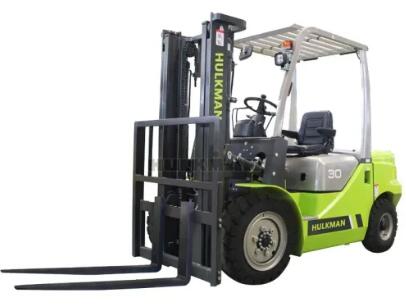
Diesel Forklift


Fuel Efficiency


Fuel efficiency is another crucial factor to consider when comparing diesel and petrol forklifts. Generally, diesel engines are more fuel-efficient, providing longer running times on a single tank compared to petrol engines. This makes diesel forklifts ideal for applications that demand extended periods of operation without frequent refueling. However, advancements in petrol engine technology have narrowed the gap, and some modern petrol forklifts can offer comparable fuel efficiency. It is important to evaluate the specific models and their fuel consumption rates to determine the most cost-effective option based on the anticipated usage patterns and operational needs.


Maintenance Requirements


Maintenance requirements also differ between petrol and diesel forklifts. Diesel engines tend to have simpler designs with fewer moving parts, making them generally more durable and less prone to mechanical issues. They are built to withstand the demands of heavy-duty applications and rough terrains, often requiring less frequent maintenance. Petrol engines, on the other hand, may require more regular maintenance, including tune-ups, spark plug replacements, and air filter changes. Additionally, petrol engines may require more stringent storage and safety measures due to the flammability of gasoline. It is important to consider the availability of maintenance resources, the cost of spare parts, and the expertise of technicians when choosing between diesel and petrol forklifts.


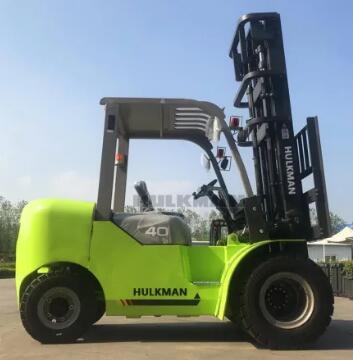
Diesel Forklift


Suitability for Applications


The choice between diesel and petrol forklifts depends on the specific operational requirements and working conditions. Diesel forklifts are commonly preferred for outdoor applications, particularly in heavy industries such as construction, manufacturing, and warehousing. Their robustness, high torque output, and ability to handle heavy loads make them suitable for demanding environments. Petrol forklifts are often used indoors or in more lightweight applications, such as retail and distribution centers, where their agility, faster speeds, and quieter operation may be advantageous. The absence of exhaust emissions and fumes from petrol forklifts also makes them a suitable choice for environments with strict ventilation and air quality regulations.


Conclusion


When choosing between diesel and petrol forklifts, it is important to consider the specific requirements of the operation. Diesel forklifts excel in heavy-duty applications, offering high torque and extended running times, while petrol forklifts provide agility, faster speeds, and suitability for lighter loads. Fuel efficiency, maintenance needs, and environmental considerations are also important factors to evaluate. By selecting the appropriate forklift based on these considerations, businesses can maximize efficiency, productivity, and cost-effectiveness in their material handling operations. We are a diesel forklift supplier. If you are interested in our products, please contact us now!
2023年6月18日星期日

Power and Performance: Exploring the Functions and Benefits of Diesel Forklifts

In the world of material handling and logistics, diesel forklifts play a vital role in efficiently moving heavy loads and facilitating warehouse operations. These robust machines are designed to provide exceptional power, durability, and versatility. In this article, we will delve into the functions and benefits of diesel forklifts, exploring their capabilities, performance characteristics, and suitability for various applications.


Lifting and Moving Heavy Loads


The primary function of a diesel forklift is to lift and transport heavy loads with ease. Diesel engines are known for their high torque output, which enables these forklifts to effortlessly handle heavy loads and navigate challenging terrains. Whether it's palletized goods, large containers, or bulky materials, diesel forklifts excel in applications that require lifting capacities ranging from a few thousand pounds to several tons. Their robust design and powerful engine allow for efficient material handling in industries such as manufacturing, construction, logistics, and warehouses.


Diesel Forklift


Outdoor and Rough Terrain Applications


Diesel forklifts are particularly well-suited for outdoor applications and rough terrains. The torque generated by their diesel engines allows them to tackle uneven surfaces, gradients, and unpaved areas with ease. Whether it's construction sites, lumber yards, or shipping ports, diesel forklifts provide the necessary strength and stability to handle demanding environments. The ability to operate effectively in outdoor settings makes them indispensable for tasks such as loading and unloading trucks, transporting materials across large yards, and handling heavy machinery or construction equipment.


Longer Operating Times and Fuel Efficiency


Another notable function of diesel forklifts is their ability to operate for extended periods on a single tank of fuel. Diesel engines are renowned for their fuel efficiency, enabling longer running times without frequent refueling. This is especially advantageous in applications that require continuous operation without interruption, reducing downtime and improving productivity. The fuel efficiency of diesel forklifts, combined with the availability of large fuel tanks, ensures that they can handle demanding workloads without the need for frequent refueling, making them an ideal choice for intensive operations.


Diesel Forklift


Durability and Low Maintenance Requirements


Diesel forklifts are known for their durability and low maintenance needs. The robust design of these machines, including their heavy-duty frames, solid tires, and powerful engines, allows them to withstand rigorous use and harsh operating conditions. Diesel engines typically have fewer moving parts compared to other types of engines, reducing the likelihood of mechanical issues and the need for frequent repairs. This results in lower maintenance costs and increased uptime for businesses. Additionally, diesel forklifts often have longer service intervals, minimizing downtime for routine maintenance and maximizing operational efficiency.


Conclusion


Diesel forklifts are indispensable workhorses in material handling operations, offering exceptional power, durability, and performance. With their ability to lift and move heavy loads, operate in outdoor and rough terrain environments, and provide extended operating times with fuel efficiency, diesel forklifts remain a popular choice for industries requiring robust and reliable material handling solutions. We are a diesel forklift supplier. If you are interested in our products, please contact us now!
2023年5月16日星期二

1.5Ton 1.8Ton Diesel Forklift

Standard Lifting Height: 3000mm

Standard Fork Length: 920mm

Standard Air Tires

LED Warning Light

OEM Brand Service

Optional Attachments: Fork Side Shifter, Paper Roll Clamp, Bale Clamp, Rotator etc.


1.5Ton 1.8Ton Diesel Forklift


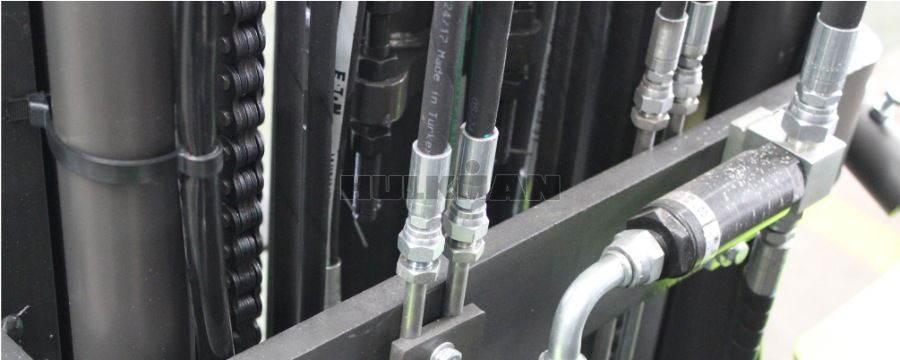
HULKMAN 1.5Ton 1.8Ton Diesel Forklift uses well-designed pipe and joint, which adapts each other and makes the hydraulic system stable and forklift durable.


1.5Ton 1.8Ton Diesel Forklift


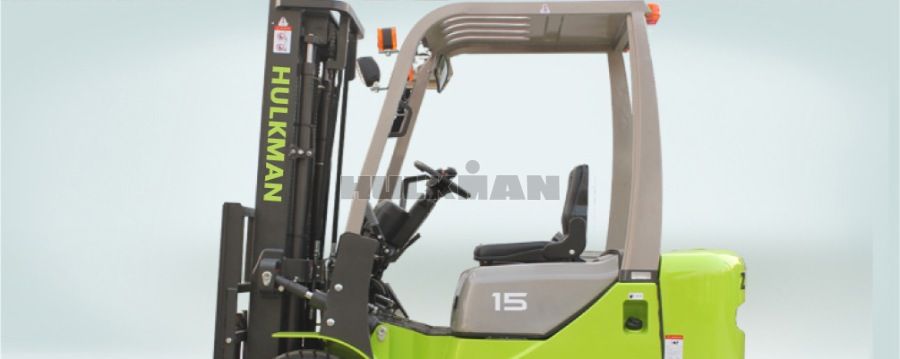
The HULKMAN forklift overhead guard is made by press welding, with 5 transparent plastic cover to make sure rainproof and good view.


1.5Ton 1.8Ton Diesel Forklift


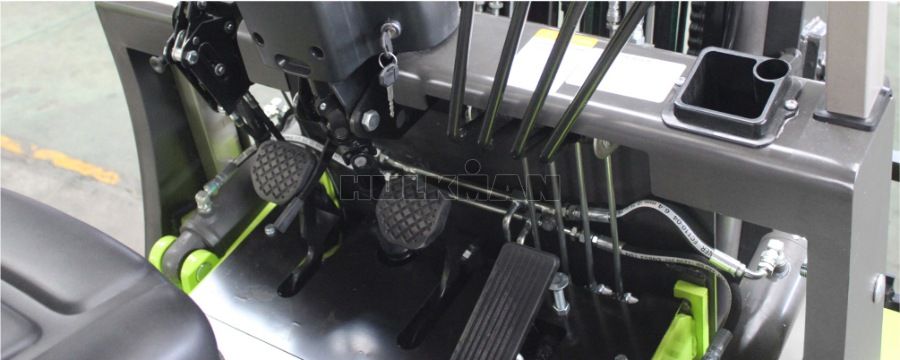
This is HULKMAN forklift optimized operation lever layout, the new operation handle, and the spacious operating space, further enhance the forklift operation comfortable.


1.5Ton 1.8Ton Diesel Forklift


In HULKMAN forklift’s hydraulic pipeline, the rubber tube and the joint adopt the conical surface seal form, the sealing effect is good, the long-term use will not seep the oil.


1.5Ton 1.8Ton Diesel Forklift


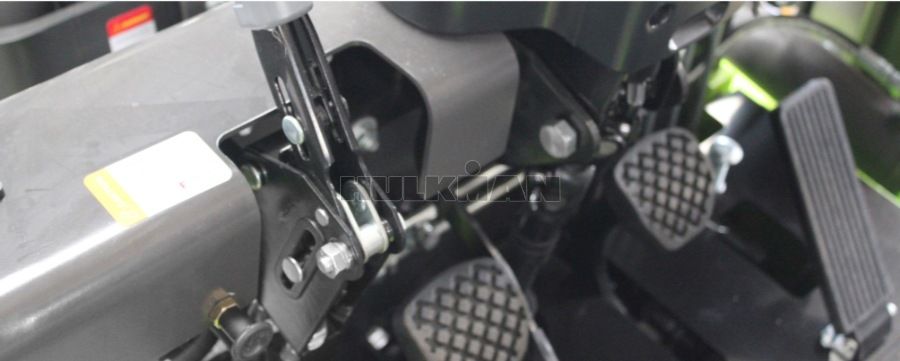
HULKMAN forklift’s spacious upper and lower pedal and driving space can reduce leg operation fatigue.


1.5Ton 1.8Ton Diesel Forklift


The forklift design of the combined switch with the car’s double handle is simpler and more convenient.


1.5Ton 1.8Ton Diesel Forklift


HULKMAN forklift good design with buffer in lifting system will effectively reduce the vibration of mast.


1.5Ton 1.8Ton Diesel Forklift


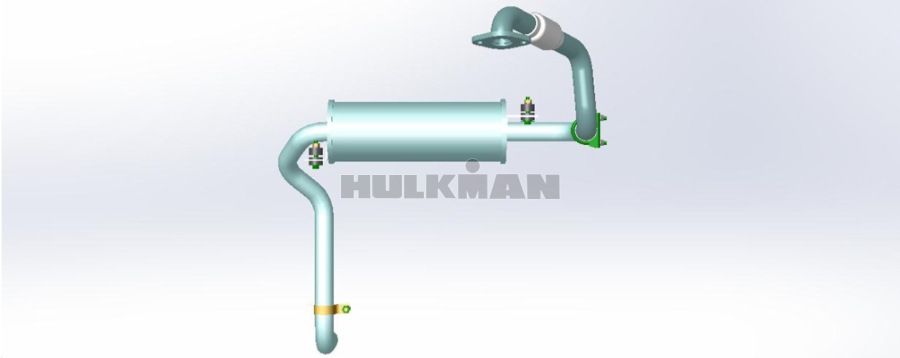
A new muffler installation structure is adopted to reduce HULKMAN forklift vibration and noise of the whole vehicle.


Specification Parameters

Features


FD15

FD18

Power

/

Diesel Engine

Diesel Engine

Rated Capacity

kg

1500

1800

Center of Load

J(mm)

500

500

Lifting Height

h1(mm)

3000

3000

Free Lifting Height

h3(mm)

130

130

Fork Size LxWxH

L5xWxT(mm)

920x100x35

920x100x40

Tilt Forward/Backward

/

6/12

6/12

Min. Turning Radius

R1(mm)

2060

2060

Min. Right Angle Stacking Width

Ra(mm)

3780

3780

Min. Ground Clearance (Mast)

m(mm)

105

105

Overhead Guard Height

h4(mm)

2040

2040

Front Overhang

L3(mm)

400

400

Rear Overhang

L4(mm)

450

450

Performance


Max. Traveling Speed (Load)

km/h

14.5

14.5

Max. Lifting Speed (Load/Empty)

mm/s

460/500

460/500

Drawbar Pull/Gradeability

kN/%

16/20

16/20

Size


Overall Length with fork

L1(mm)

3170

3170

Overall Width

W1(mm)

1086

1086

Mast Lowered Height

h2(mm)

1990

1990

Mast Extended Height

mm

4025

4025

Chassis


Tire (Front)

/

6.5-10-10PR

6.5-10-10PR

Tire (Rear)

/

5.00-8-10PR

5.00-8-10PR

Wheelbase

L2(mm)

1400

1400

Tread Width (Front/Rear)

S/P(mm)

890/920

890/920

Curb Weight (None-Load)

kg

2680

2890

Engine


Battery (Voltage/Capacity)

V/Ah

12/90

12/90

Engine Model

/

Xinchai NC485BPG

Xinchai NC485BPG

Rated Power

kw

30

30

Rated Torque

kw

131

131

Displacement

L

2.27

2.27

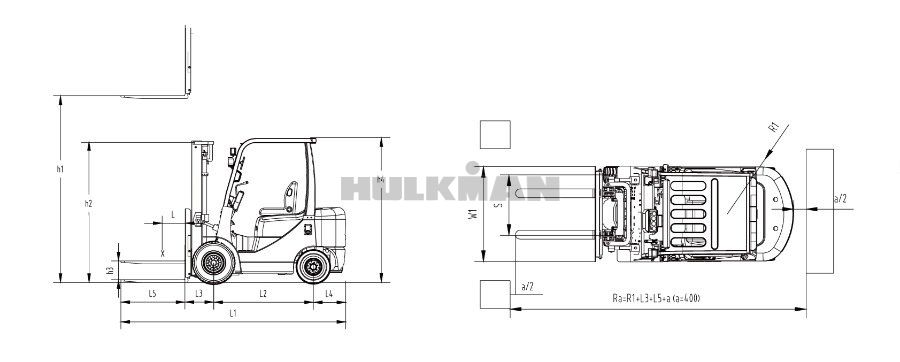
Remark: Below HULKMAN 1.5Ton 1.8Ton Diesel Forklift 2D Graph for further reference.

1.5Ton 1.8Ton Diesel Forklift


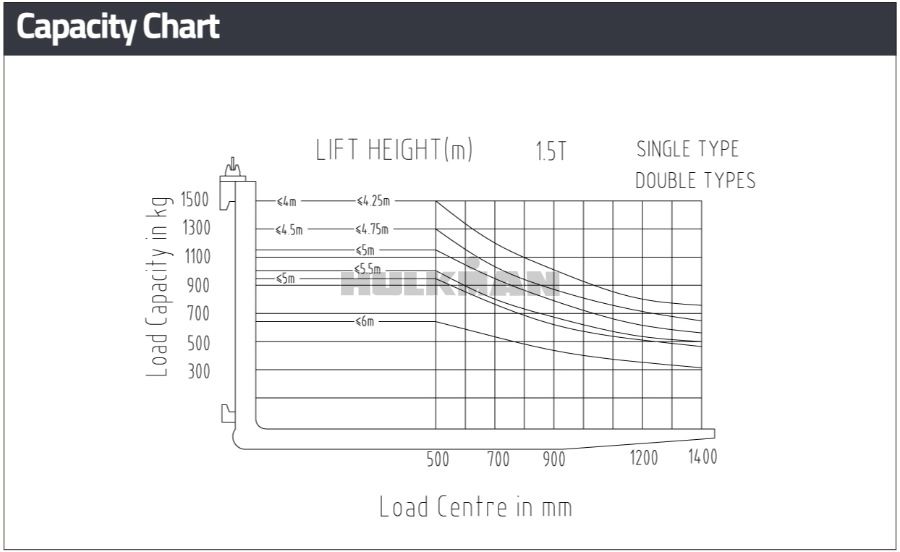
Customized Lifting Height and Loading Capacity

Standard 2 Stage (Duplex) Mast

Lifting Height

Loading Capacity

Mast Lowered Height

Mast Tilt Angle


1.5Ton

Single Tire

1.8Ton

Single Tire

1.5-1.8Ton

Fork Landing

1.5-1.8Ton

Height with Backrest

F/R

2000mm

1500kg

1800kg

1490mm

3025mm

6/12°

2500mm

1500kg

1800kg

1740mm

3525mm

6/12°

3000mm

1500kg

1800kg

1990mm

4025mm

6/12°

3300mm

1500kg

1800kg

2140mm

4325mm

6/12°

3500mm

1500kg

1800kg

2240mm

4525mm

6/12°

3700mm

1500kg

1800kg

2340mm

4725mm

6/12°

4000mm

1500kg

1800kg

2540mm

5025mm

6/12°

4500mm

1300kg

1400kg

2790mm

5525mm

6/6°*6/12°

5000mm

950/*1150kg

1150/*1350kg

2040mm

6025mm

6/6°*6/6°

5500mm

*1000kg

*1050kg

3340mm

6525mm

*3/6°

6000mm

*650kg

*850kg

3590mm

7025mm

*3/6°


Optional 2 Stage (Duplex) Full Free Mast

Lifting Height

Loading Capacity

Mast Lowered Height

Free Lifting Height

Mast Tilt Angle


1.5Ton

Single Tire

1.8Ton

Single Tire

1.5-1.8Ton

Fork Landing

1.5-1.8Ton

Height with Backrest

1.5-1.8Ton

Height with Backrest

F/R

2000mm

1500kg

1800kg

1490mm

3035mm

495mm

6/12°

2500mm

1500kg

1800kg

1740mm

3535mm

745mm

6/12°

3000mm

1500kg

1800kg

1990mm

4035mm

995mm

6/12°

3300mm

1500kg

1800kg

2140mm

4335mm

1145mm

6/12°

3500mm

1500kg

1800kg

2240mm

4535mm

1245mm

6/12°

3700mm

1500kg

1800kg

2340mm

4735mm

1345mm

6/12°

4000mm

1500kg

1800kg

2540mm

5035mm

1545mm

6/12°


Optional 3 Stage (Triplex) Full Free Mast

Lifting Height

Loading Capacity

Mast Lowered Height

Free Lifting Height

Mast Tilt Angle


1.5Ton

Single Tire

1.8Ton

Single Tire

1.5-1.8Ton

Fork Landing

1.5-1.8Ton

Height with Backrest

1.5-1.8Ton

Height with Backrest

F/R

3600mm

1500kg

1800kg

1725mm

4590mm

730mm

6/6°

4000mm

1300kg

1800kg

1860mm

4990mm

865mm

6/6°

4350mm

1200kg/*1300kg

1450kg

1975mm

5340mm

980mm

6/6°

4500mm

1200kg/*1250kg

1350kg

2025mm

5490mm

1030mm

6/6°

4800mm

1100kg/*1200kg

1250kg

2125mm

5790mm

1130mm

6/6°

5000mm

1000kg/*1100kg

1150kg

2195mm

5990mm

1200mm

6/6°

5500mm

*1000kg

*1000kg

2415mm

6490mm

1420mm

*3/6°

6000mm

*650kg

*850kg

2575mm

6990mm

1580mm

*3/6°


Remark: Not to take the largest rise in the shelf: 3T-3.5T -588mm.

Free lifting height of the shelf: 3T-3.5T +588mm.

*Means double tires


1.5Ton 1.8Ton Diesel Forklift


Optional Choices

Optional Configurations: windshield, 2/3 stage full free mast, double air filter, fork sleeve, double tires and extended devices, fir extinguishing muffler, solid tire, rotary work alarming light, fan, oil batch double air filter, purifying muffler, roof shield rain proof cover, LED lights, luxury seat.


Optional Attachments: side shifter, fork positioner, hinged fork, carpet boom, hook, extended fork, fork cover, lifting boom, paper roll clamp, bale clamp, highed cover, rotator, barrel clamp, loading stabilizer.